US East Coast Day 3: NYC: Rockefeller Center - Top of the Rock, Nintendo World Store, Colbert Report Taping, Times Square

On Jan. 14, 08 my friend and I headed out to the "Top of the Rock" observation deck on the top floors of the GE Building at Rockefeller Center.

The tickets for going up to the "Top of the Rock" were pretty expensive. One ticket per person was $17.50. The tickets were "timed" so you had to arrive at your scheduled time printed on the ticket. We bought our tickets online and printed them out (seems to be a recent trend in tourism now). We decided to go to the observation deck at Rockefeller Center versus going to the one at the Empire State Building because I had read reviews on Trip Advisor of how crowded the the observation deck at the Empire State building was. And besides wouldn't it be better to see the Empire State Building instead of being in it? (I had been to the Empire State Building when I was a kid but now have vague memories of it...)

January is a nice time to visit New York and other popular tourist cities, because there are almost no crowds. We almost had the whole observation deck to ourselves:

Model of Rockefeller Center at the lobby:

Photobucket


New York skyline:

Photobucket

US East Coast Day 2: New York City: Statue of Liberty, Financial District, Chinatown


On Jan. 13, 08 I started my first day exploring New York City. I stayed with my friend's family in Brooklyn so I went around sightseeing with my friend.

The first thing we did was buy a Metrocard for transit. The 7 day pass for $24 allowed unlimited access to buses and subway trains. Although we didn't really get our money's worth (one ride on the subway cost $2 no matter how far you go), it was better than fumbling around with change.

Photobucket

New York City Subway:

Photobucket

Photobucket

US East Coast Day 1: Vancouver-Dallas/Ft. Worth-New York

On Jan. 12, 08 I started my week long trip to New York, Philadelphia and Washington D.C.

Usually a flight from Vancouver to New York direct would be about 5 hours, but since I redeemed my flight from Japan Airlines mileage bank, I had to fly with American Airlines (their alliance partner).

Since American Airlines no longer has any direct flights from Vancouver to anywhere else but Dallas, I had to fly to Dallas to change flights. They used to fly direct to New York, Boston, Dallas, Miami, Washington D.C. if memory serves me right when they had a partnership with the now defunct Canadian Airlines.

Arriving at Dallas, the airport is so big that you have to board a train to change terminals to get to your next gate:

Photobucket

Kagoshima Airport, Kyushu Japan

Happy (Belated) New Year!

It seems that after launching this blog way back in Dec. 2005 back as a student exchange student, I finally get page loads each day. Thank goodness for that post on fixing the Compaq V2030US laptop!

Here are some more new "old" pictures of provincial domestic Japanese airports.

I used this airport from my trip to Kagoshima


Photobucket

Vancouver International Airport + New "Link Building" Expansion

Here are some pictures of Vancouver International Airport (more commonly known as YVR).

Here is the progress of the new Link building. It is supposed to bridge the Domestic Terminal and the International Terminal as well as being the entry point for passengers arriving via transit from downtown Vancouver on the yet to be opened (2009 scheduled to open) Canada Line (A fully automated railway system).

Both the Link building and the Canada Line are being ready for the 2010 Olympic Winter games in Vancouver

From the outside:

Photo Sharing and Video Hosting at Photobucket


Kagoshima in April: Rainy and Muggy


Continuing with the posting of photos that are more than 1 year old.

This post continues from my post on Kumamoto on April 4, 2006

I visited Kagoshima on April 5, 2006.

When I arrived it was raining all day (just like in Vancouver) so I did not take a lot of pictures. A lot of the places that I walked by, I didn't take any pictures of...

Starting with the arrival by Kyushu Shinkansen "Tsubame" at Kagoshima-Chuo Station on the night of April 4, 2006.

Photo Sharing and Video Hosting at Photobucket

Kumamoto: A Town with a Castle and a Garden


I visited Kumamoto on April 4, 2006. It was one of the stops on my Kyushu trip. I arrived via the train from Fukuoka.

Some facts about the city courtesy of japan-guide.com and jnto.go.jp:

Kumamoto, situated roughly at the center of Kumamoto Prefecture, is the administrative and economic center of the prefecture. From the early 17th century to the end of the 19th century, it was prosperous as a castle town. Shira-kawa River and its branches run through the downtown area around the Kumamoto Castle. Therefore the city is called "City of Woods and Fresh Water".

Kumamoto is also a major city on Kyushu's west coast with a population of 650,000. The city is most famous for its castle, which is one of Japan's largest.

Kumamoto Castle:

Kumamoto Castle was constructed by the Kato Clan in 1607. Half a century later, it was handed over to the Hosokawa Clan, which ruled the surrounding fief from there for over 200 years until the end of the feudal age.

In 1877, Kumamoto Castle became the site of Japan's last civil war, when an army of former samurai under Saigo Takamori unsuccessfully rose against the new Meiji government. Large parts of the castle were destroyed in that civil war.

Most of the present castle buildings, including the large and small castle towers, are reconstructions, dating from the 1960s. The interior of the castle towers is a modern museum.

(from japan-guide.com)

Sakura in full bloom at the castle grounds:

Photo Sharing and Video Hosting at Photobucket

Fukuoka

I visited Fukuoka, Japan on April 3, 2006:

Spring, in Japan the season of new beginnings, this is probably a new hire orientation.

Photo Sharing and Video Hosting at Photobucket

How to Fix an Overheating Compaq Presario V2000 Series (V2030us)

Although this post doesn't really match the "theme" of this blog, I think posting this might help some people.

Have a Compaq Presario V2000 series notebook (bought between 2004 and 2005)?

Is it automatically shutting down for no reason after maybe 30 minutes to 1 hour of use?

Then the problem with your notebook (like mine) is that it is overheating.

How can you tell if its overheating and not some other problem like a virus?

Go download and run the CPU Burn In program. It is a software that runs your CPU to the maximum possible operating temperature.

I set the program to run for 5 minutes and within 2 minutes the notebook shut down by itself. The reason is that Windows automatically shuts down to prevent any thermal damage to your CPU.

I contacted the HP technical support (text chat with a technican, a phone call support would cost money, $30 I think) and they said that since the notebook isn't under warranty anymore I would have to pay $259 to sent it for an inspection.

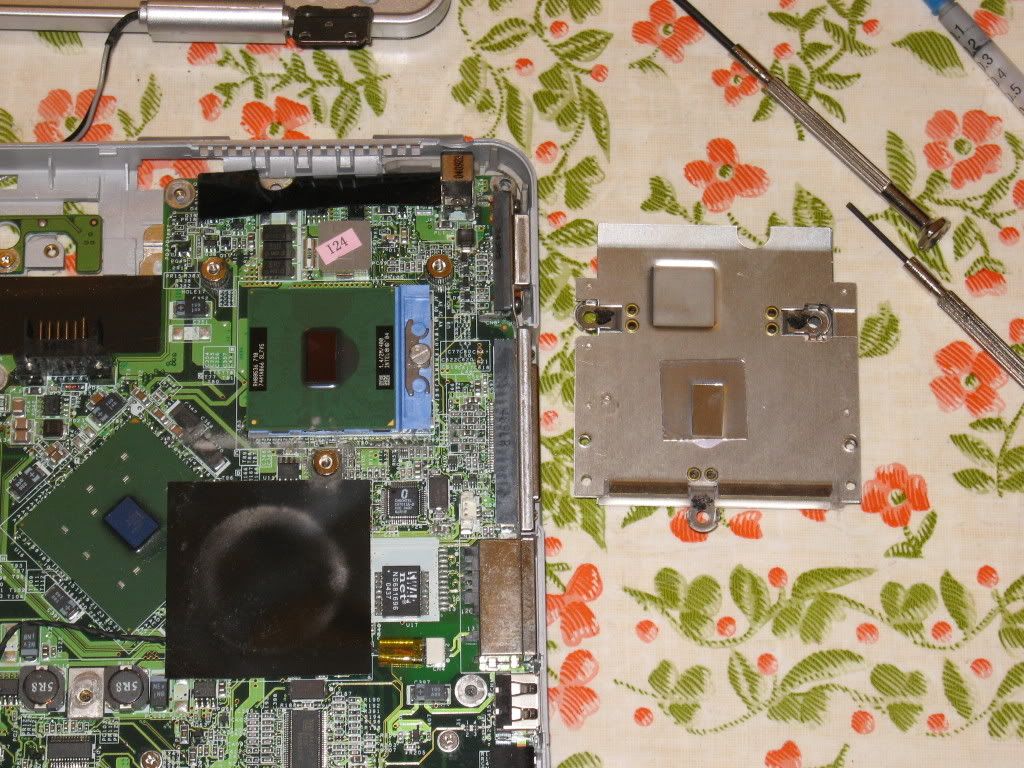
Seemed like a rip off to me and after I searched around, I saw a post in the forum with people having the same problem as me. They said the reason why the notebook overheats is because there isn't any thermal paste between the CPU and heatsink!

Look at the picture below:

Photo Sharing and Video Hosting at Photobucket

Kyoto Station


Updated: Google Map added for post "Going to Kyoto and Nintendo HQ" and all thumbnails are clickable to reveal full HD image

Why am I posting pictures of Kyoto Station...its because before I went to Kyoto before, I read of how big and impressive it looked and I couldn't find any *good* images, other than a few crappy thumbnails.

Its also interesting because of its gigantic scale and the way its built. Also I think its one of the very few completely new stations in Japan (most stations in Japan are pretty dilapidated, especially in Tokyo...). Although the station building is "new" (10 years old), the platforms I found to be pretty lousy, typical blacktop (pavement) flooring that you see in 90% of the stations in Japan.

Also one should note that Kyoto's actual downtown is not right outside of the station, it is maybe a 10-15 ride by taxi away. Other than the shops connected to the station, outside there seems to be nothing but pachinko parlors.

Below is a description from Wikipedia:

Kyoto Station (京都駅) is the most important transportation hub in Kyoto, Japan. It has Japan's second-largest train station building (after Nagoya Station) and is one of the country's largest buildings, incorporating a shopping mall, hotel, movie theater, Isetan department store, and several local government facilities under one 15-story roof.

The first Kyoto Station opened for service by decree of Emperor Meiji on February 5, 1877. It was replaced by a newer, Renaissance-inspired facility in 1914, which featured a broad square leading from the station to Shichijo Avenue. Before and during World War II, the square was often used by imperial motorcades when Emperor Showa traveled between Kyoto and Tokyo: the image of Kyoto Station with its giant Rising Sun flags became a well-known image of the imperial era. This station burned to the ground in 1950 and was replaced by a more utilitarian concrete facility in 1952.

The current Kyoto Station opened in 1997, commemorating Kyoto's 1,200th anniversary. It is 70 meters high and 470 meters from east to west, with a total floor area of 238,000 square meters. Architecturally, it exhibits many characteristics of futurism, with a slightly irregular cubic facade of plate glass over a steel frame. The architect was Hiroshi Hara.

Kyoto, one of the least modern cities in Japan by virtue of its many cultural heritage sites, was largely reluctant to accept such an ambitious structure in the mid-1990s: The station's completion began a wave of new high-rise developments in the city that culminated with the 20-story Kyocera Building. For this, there are opinions criticizing the station design for taking part in breaking down the traditional cityscape.

Aside from the main building on the north side of the station, the Hachijō-guchi building on the south side was built to house Tōkaidō Shinkansen which started operation in 1964. The underground facilities of the station, including the shopping mall Porta beneath the station square, was constructed when the subway opened in 1981.

(Courtesy of Wikipedia)

Useful Links for visiting Kyoto with regards to transportation:

Kyoto City Transportation

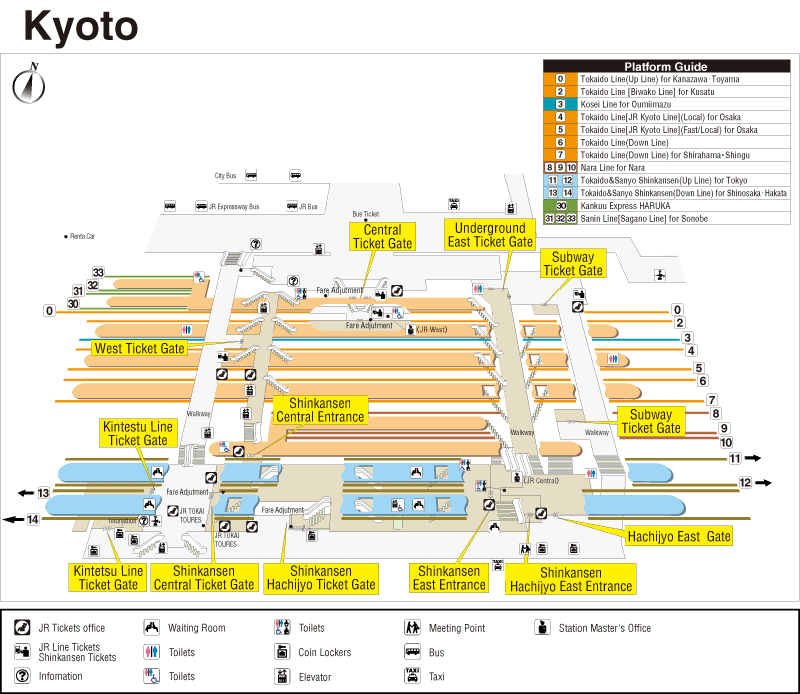
Layout of the Building:

Photo Sharing and Video Hosting at Photobucket

Photo Sharing and Video Hosting at Photobucket

Photo Sharing and Video Hosting at Photobucket

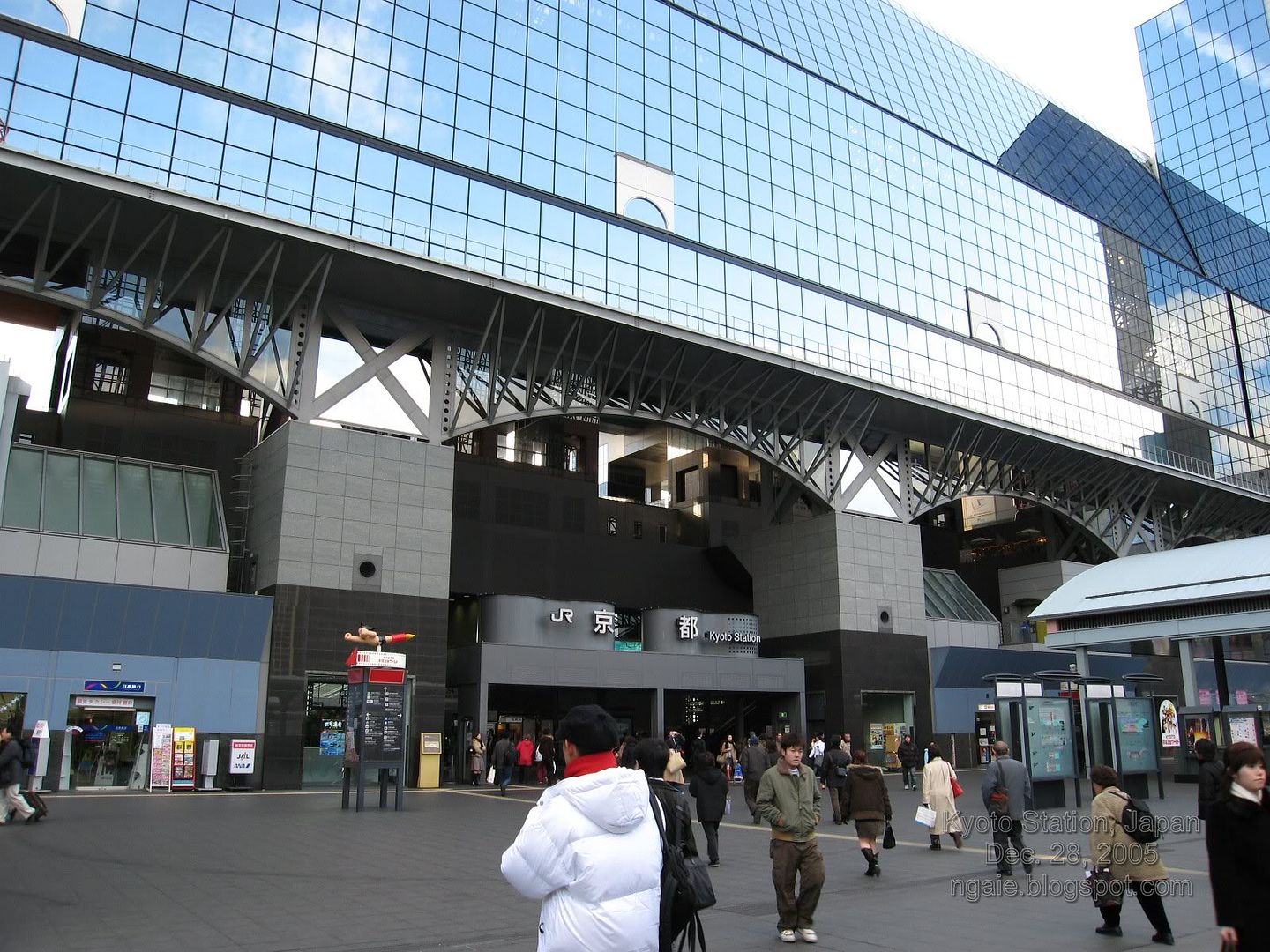
From the outside and vicinity:

Photo Sharing and Video Hosting at Photobucket